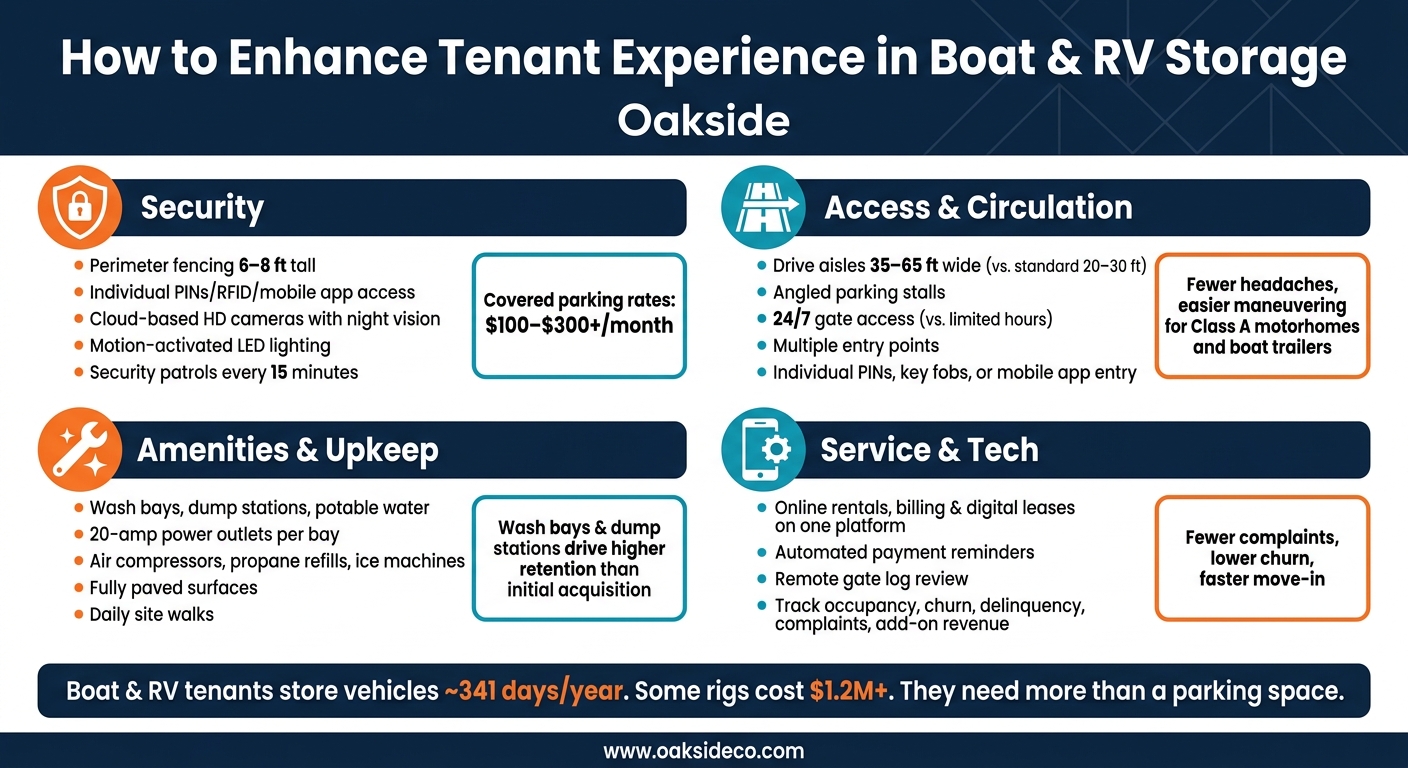
If I want better tenant experience in boat and RV storage, I need to get 4 things right: security, access, upkeep, and service. That’s the short answer.
People often store boats and RVs for about 341 days per year, and some rigs can cost $1.2 million+. So tenants don’t just want a parking space. They want a place that feels safe, easy to use, clean, and well run.
Here’s the article in plain English:
- Security comes first: visible cameras, strong fencing, good lighting, and individual gate access matter most.
- Easy access keeps people happy: big vehicles need room, clear signs, and gate hours that fit weekend travel.
- Useful amenities help retention: wash bays, dump stations, power hookups, and clean paved surfaces make visits less of a chore.
- Good service holds it together: online billing, digital leases, fast replies, and tracking complaints help cut move-outs.
A simple way I’d look at it is this: if tenants can get in easily, park without stress, trust the site, and see that it’s cared for, they’re more likely to stay.
| Focus area | What tenants care about most | What it can affect |
|---|---|---|
| Security | Cameras, gates, lighting, fencing | Trust, renewals, pricing |
| Access | Aisle space, signage, gate hours | Ease of use, fewer headaches |
| Upkeep & amenities | Cleanliness, pavement, wash/dump, power | Satisfaction, repeat stays |
| Service & tech | Billing, account tools, issue response | Fewer complaints, lower churn |
So the main idea is simple: fix the pain points tenants notice first, then track what changes after.
Boat & RV Storage: Basic vs. Enhanced Facility Features
1. Build Trust With Strong Security
Boat and RV tenants won’t settle for a chain-link fence and one shared gate code. They want security they can see: tight access control, clear signs the property is watched, and proof the site is run with care. When that’s in place, people tend to trust the rest of the facility too.
Use Layered Security Instead of a Single Feature
One security feature isn’t enough. The strongest setups use several layers at once: anti-climb perimeter fencing that’s 6 to 8 feet tall, individual access codes or RFID entry, timestamped gate logs, high-resolution cameras with night vision, and sensor-activated pole-mounted LED lighting to cut dark spots across the lot.
That mix sends a strong message right away. Cameras at entry points, bright lighting near the back of the property, and clearly marked access controls show tenants the facility takes protection seriously. Some sites even run security patrols as often as every 15 minutes.
One upgrade that deserves top priority is cloud-based access control with real-time entry and exit logs. With individual PINs or mobile app access, it’s much easier to spot odd activity and deal with it fast. When security is visible and well kept, complaints usually drop, and renewals get easier.
Run Monthly Security Checks and Share Updates With Tenants
Security only works if it’s maintained. Monthly inspections should cover gate operators, fence lines, camera performance, lighting fixtures, and incident logs. Landscaping is an easy thing to miss. Trees and shrubs that block camera views can quietly weaken an otherwise solid setup.
These checks matter even more when tenants know they’re happening. Keeping a record of inspections helps with insurance claims and shows the facility is being managed, not just watched from a distance. A short monthly security update after each inspection can go a long way. It tells tenants the site is still being monitored and cared for.
Basic vs. Enhanced Security Packages: A Side-by-Side Comparison
The difference between a basic setup and an enhanced one is big, especially when it comes to tenant confidence and the rental rates a facility can support.
| Feature | Basic | Enhanced |
|---|---|---|
| Perimeter | Standard chain-link fencing | 6- to 8-foot anti-climb fencing or 13-foot perimeter walls |
| Access Control | Shared keypad code | Individual PINs, RFID, or mobile app access with real-time logs |
| Lighting | Standard dusk-to-dawn fixtures | Motion-activated LED lighting with fewer blind spots |
| Surveillance | Local DVR recording | Cloud-based HD cameras with night vision, motion alerts, and regular site patrols |
Facilities with this level of security can command covered parking rates of $100 to over $300 per month.
With trust in place, the next step is making entry, movement, and day-to-day use just as smooth.
sbb-itb-09b4138
2. Improve Access, Circulation, and Daily Convenience
Security builds trust. Access is what keeps tenants moving. After people feel good about the site, the next pain point is usually simple: can they get a big vehicle in, out, and parked without a headache?
Design Wide Aisles, Clear Turns, and Simple Signage
Standard drive aisles made for regular vehicles often fall short for large rigs. Big Class A motorhomes and boats on trailers need space to move safely. RV SuperStorage in Chandler, Arizona, tackled this with drive aisles that are 35 and 65 feet wide and angled parking stalls across the property.
Angled parking makes turns easier and helps cut down on scrapes. Layout isn’t the only piece, though. Entry lanes also need enough length so large vehicles don’t spill back onto public roads while waiting for the gate to open.
Signage does more work than many operators think. Numbered rows, directional arrows, and clear lane markings help tenants find their space without looping around the property. That means less idling and less congestion.
Match Gate Hours and Entry Systems to Tenant Travel Patterns
Boat and RV tenants often head out early on Friday and come back late on Sunday. Extended access or 24/7 entry fits that routine and gives them room to return after a weekend trip without stressing about a closed gate.
Individual PINs, key fobs, or mobile app entry help limit code sharing and make entry simpler. Remote management software also lets tenants pay bills and update account details online. And when a site has multiple entry and exit points, traffic tends to move more smoothly.
Standard vs. Optimized Access Configuration: A Side-by-Side Comparison
| Feature | Standard Configuration | Optimized Configuration |
|---|---|---|
| Aisle Width | 20–30 feet | 35–65 feet |
| Parking Angle | 90-degree (straight-in) | Angled stalls for easier maneuvering |
| Gate Hours | Limited (e.g., 6 AM–9 PM) | 24/7, 365-day access |
| Entry Points | Single gate | Multiple gates with long stacking lanes |
| Entry System | Shared gate code | Individual PINs, key fobs, or mobile app entry |
| Signage | Minimal or no row markers | Numbered rows, directional signs, lane markings |
Once access feels easy, attention usually shifts to the things tenants notice every time they visit: amenities and upkeep.
3. Upgrade Amenities and Site Maintenance Tenants Notice
Access gets tenants through the gate. Amenities and upkeep often decide if they stay.
Focus on Amenities That Tenants Use Every Day
Boat and RV tenants care most about practical features that make each visit easier. The amenities that matter most are the ones tied to trip prep and vehicle care.
Once access is smooth, tenants start judging the site on a simple question: Is this place useful, and does it look cared for?
Wash bays help with both retention and marketing because they make cleanup easier. Electrical hookups are also high on the list. At a minimum, 20-amp outlets in covered bays help tenants keep batteries charged between trips. Extras like propane refills, potable water, and ice machines can make the property more useful.
The key is simple: match amenity spend to what tenants will use.
Keep Pavement, Drainage, Cleanliness, and Lighting in Good Shape
Amenities may draw tenants in. Site condition is what keeps trust from slipping.
Cracked pavement, poor drainage, trash, and weak lighting send the wrong message fast. Even if the units are fine, the site can still feel neglected.
Asphalt or reinforced concrete lasts longer than gravel, which may cost less at the start but can lead to more upkeep over time. Motion-sensor fixtures can improve security coverage while helping control energy costs.
Daily staff walks also matter more than they might seem. They help teams catch fluid leaks, low tires, or beeping alarms before tenants spot them.
Core vs. Expanded Amenity Packages: A Side-by-Side Comparison
| Feature | Core Package | Expanded Package |
|---|---|---|
| Surface Type | Basic pavement or gravel | Fully paved surfaces |
| Power Access | None or site lighting only | 20-amp outlets per bay for battery charging |
| Wash & Dump | None | Wash bays, dump stations, and potable water |
| Air & Utility | None | Air compressors, propane refills, and ice machines |
| Lighting | Standard perimeter lights | Motion-sensor lighting throughout |
| Maintenance Routine | Reactive (as needed) | Daily site walks and issue tracking |
| Retention Impact | Average | High; wash bays and dump stations often contribute more to tenant retention than initial acquisition |
From there, service and technology should make each visit easier to manage.
4. Strengthen Service, Technology, and Performance Tracking
Once security, access, and upkeep are handled, service and tracking help keep the tenant experience steady.
Communicate Clearly and Resolve Issues Quickly
Tenants can leave fast if service drops off. That’s why quick, steady communication matters so much. Reply to calls, emails, and on-site issues without delay. Explain policies in plain language. When maintenance or security issues come up, keep tenants in the loop.
Fast replies and simple digital tools make the facility easier to use, which can support renewals.
Use Digital Tools for Access, Billing, and Account Management
To cut friction at each touchpoint, use digital tools that make move-in, billing, and access easier. Use one platform for online rentals, billing, digital leases, and gate access. Automated payment reminders and online payment portals cut down on the need for staff to chase late payments, and digital lease signing speeds up move-in. Use individual credentials for gate access, and review gate activity remotely.
Track Retention, Churn, Complaints, and Amenity Returns
Tech only matters if operators track what is changing. Watch occupancy, average stay length, delinquency, top complaint types, and add-on revenue per tenant. Churn patterns are especially useful for spotting whether pricing or service changes are hurting retention. Use these metrics to see whether changes improve satisfaction and retention.
| Metric | What It Tells You |
|---|---|
| Occupancy Rate | Whether demand is strong and pricing is competitive |
| Average Stay Length | How well the facility keeps tenants over time |
| Delinquency Rate | Whether billing tools are cutting late payments |
| Top Complaint Types | Which service or site issues come up again and again |
| Add-on Revenue per Tenant | Which amenities are producing measurable returns |
| Gate Log Usage | Whether gate hours and entry tools match actual usage patterns |
Conclusion: Focus on the Changes That Improve Satisfaction Most
The best tenant experience usually comes down to fixing the pain points tenants notice first: security, access, upkeep, and service.
In boat and RV storage, security comes first. People are storing high-value vehicles, so strong security helps tenants feel more at ease and more willing to stay.
Once security feels solid, convenience becomes the next thing tenants judge. Wide aisles, clear wayfinding, and access hours that line up with how tenants travel make each visit simpler.
After that, tenants judge the site by what they see and use every time they show up. Clean, well-lit, well-kept properties build trust. Wash bays and dump stations can help with retention too.
Service and tracking help keep those gains in place. Retention doesn’t come from adding more amenities by itself. It comes from doing the basics well, again and again. Track retention, churn, and complaints so problems show up before they grow.
The strongest facilities tend to win by doing the basics well, every day.
FAQs
What should I upgrade first?
Start with the basics that shape tenant choices most: security and accessibility. Put your attention first on wide drive aisles, gated entry with personalized codes, cameras, and good lighting.
Once those pieces are in place, add cloud-based management software to make online rentals, billing, and access control easier to handle. As Nolen Masserman, Managing Director at Oakside, notes, strengthening these core operations supports long-term asset value.
Which amenities matter most to tenants?
Tenants tend to care most about amenities that make the property feel safe, easy to use, and hassle-free.
The big ones are:
- perimeter fencing, keypad access, cameras, and unit alarms
- extended or 24-hour access
- wide drive aisles that make maneuvering easier
- on-site features like electrical hookups, dump stations, wash bays, and air/vacuum stations
Online rentals, automated billing, and a clean, well-lit, professionally managed property can also go a long way. They make day-to-day use simpler and help build long-term trust.
How can I measure tenant satisfaction?
Measure tenant satisfaction through active communication and steady performance tracking. Listen to feedback, address specific needs, and adjust as tenant needs shift over time.
High retention and frequent referrals are strong signs that tenants are happy. As Nolen Masserman, Managing Director at Oakside, notes, proactive engagement helps build long-term tenant confidence.