Poor drainage can cut a storage property’s sale price by more than the repair cost. If a site needs $150,000 in drainage work, buyers may trim offers by $300,000 or more. For me, the main point is simple: water problems hurt NOI, tenant retention, financing, and buyer trust all at once.
If I own or review a self-storage or boat & RV site, here’s what I’d keep in mind right away:
- Water damage starts small and gets expensive fast
- Even 1 inch of water can damage buildings and stored items
- Standing water, poor grading, and clogged gutters are common warning signs
- Buyers often price in repair cost + risk + delays + hidden damage
- A neglected site can lose rent growth, face claims, and see softer loan terms
- Fixing drainage before due diligence can help protect cash flow and resale price
Self-storage and boat & RV properties are exposed because they have lots of roof area, asphalt, and concrete. Water has fewer places to soak in, so runoff collects near buildings, doors, and drive lanes. That leads to soft asphalt, rust, seepage, mold, and tenant complaints.
I’d also look at the income side. A well-kept 60,000-square-foot facility can outperform a neglected one through 92% occupancy, $1.00 per square foot rent, and about a $1.48 million gap in value at a 6% cap rate. That shows how a site issue can turn into a pricing issue.
Before a sale or refinance, I’d focus on two things: fix visible drainage defects and document inspections, repairs, and repeat problem spots. That gives buyers and lenders fewer reasons to cut price or tighten terms.
The rest of the piece breaks down where value drops, what buyers notice first, and which fixes matter most.
How Poor Drainage Lowers Property Value
Water Damage, Structural Wear, and Operating Disruption
When water keeps showing up where it shouldn’t, buildings wear out faster. Persistent moisture through floors and walls weakens concrete, warps wood, and corrodes metal. What looks like a small drainage issue on the surface can turn into a much bigger property problem over time.
The money impact usually isn’t far behind. Standing water speeds up pavement failure and creates safety hazards. And when repairs call for major excavation, operators may need to shut down drive aisles and limit access to units. That kind of disruption can hit day-to-day operations hard.
Tenants and buyers notice the warning signs fast. Mold, odors, and peeling paint make deferred maintenance hard to hide. Once those signs show up, owners often face both higher repair bills and pressure on rent.
How Drainage Problems Pressure Income and Valuation
Drainage failures don’t just hurt the site. They squeeze income too. They can reduce usable space, lead to claims, and slow rent growth, which lowers NOI. Tenants dealing with dampness or odors are also tougher to keep and less willing to accept rent increases. That can mean more turnover and tighter margins. Deferred drainage work may also hurt refinance terms.
Each type of failure creates a direct path from site condition to financial loss.
| Drainage Issue | Physical Impact | Financial / Value Impact |
|---|---|---|
| Standing Water / Poor Grading | Pavement failure, water seepage into unit doors, safety hazards | Higher maintenance costs, lower occupancy, reduced rent growth |
| Clogged Gutters | Foundation saturation, unit flooding | Tenant claims, structural repair costs |
| Inadequate Swales | Sediment buildup, overflow | Regulatory fines, dredging costs |
These are often the first things buyers and appraisers look at when they price risk.
sbb-itb-09b4138
Drainage Problems Buyers and Appraisers Notice First
Site Conditions That Signal Elevated Risk
Buyers and appraisers can spot drainage trouble on a simple walk around the property. Pooling water near unit doors, sunken asphalt, and sediment buildup along building edges tend to jump out first. During due diligence, those signs suggest the site may need grading, drainage, or pavement work.
The main issue is simple: does the site move water away from the building or not? Drainage should slope away from buildings at 2% – about 1/4 inch per foot – for at least 10 feet. If that slope isn’t there, water is more likely to collect around the foundation instead of running off.
Efflorescence – white residue on concrete – is another common sign of long-term moisture intrusion. Rust along the bottom of metal door frames or tracks, water stains at floor level, and peeling or bubbling paint near the base of the building also point to repeat moisture exposure.
Clogged or undersized gutters are another red flag buyers notice fast. When downspouts discharge within 6 to 10 feet of the foundation, water can saturate the soil at the base of the building. That can lead to erosion and repair bills that often come up during due diligence.
Drainage Defects and Their Likely Value Effects
Once buyers see these defects, they usually price in more than the repair bill. They also account for uncertainty, delays, and the chance of hidden damage. Visible deferred maintenance can hurt financing terms too, including lower loan-to-value ratios.
In practice, these issues tend to affect value through three paths: repair cost, operating disruption, and financing risk.
| Drainage Defect | Physical Warning Signs | Likely Financial / Valuation Consequence |
|---|---|---|
| Negative Grading | Water pooling against foundations; sediment near doors | High repair cost exposure; buyer price re-trading |
| Clogged / Undersized Gutters | Overflow staining on walls; erosion at building perimeter | Tenant property damage claims; increased insurance friction |
| Subsurface Failure | Soft spots in asphalt; sunken gravel; floor heaving | Operating disruption; capex surprises during due diligence |
| Inadequate Roof Drainage | Ponding water; interior ceiling stains; membrane degradation | Lower offers; tighter loan terms |
| Erosion / Soft Pavement Edges | Tripping hazards; navigation issues; water traps | Reduced curb appeal; higher repair exposure; lower loan-to-value ratios |
Drainage problems also shape how buyers judge the rest of the property. If the drainage looks neglected, many assume other systems may have been put off too.
Drainage Improvements That Protect NOI and Resale Value
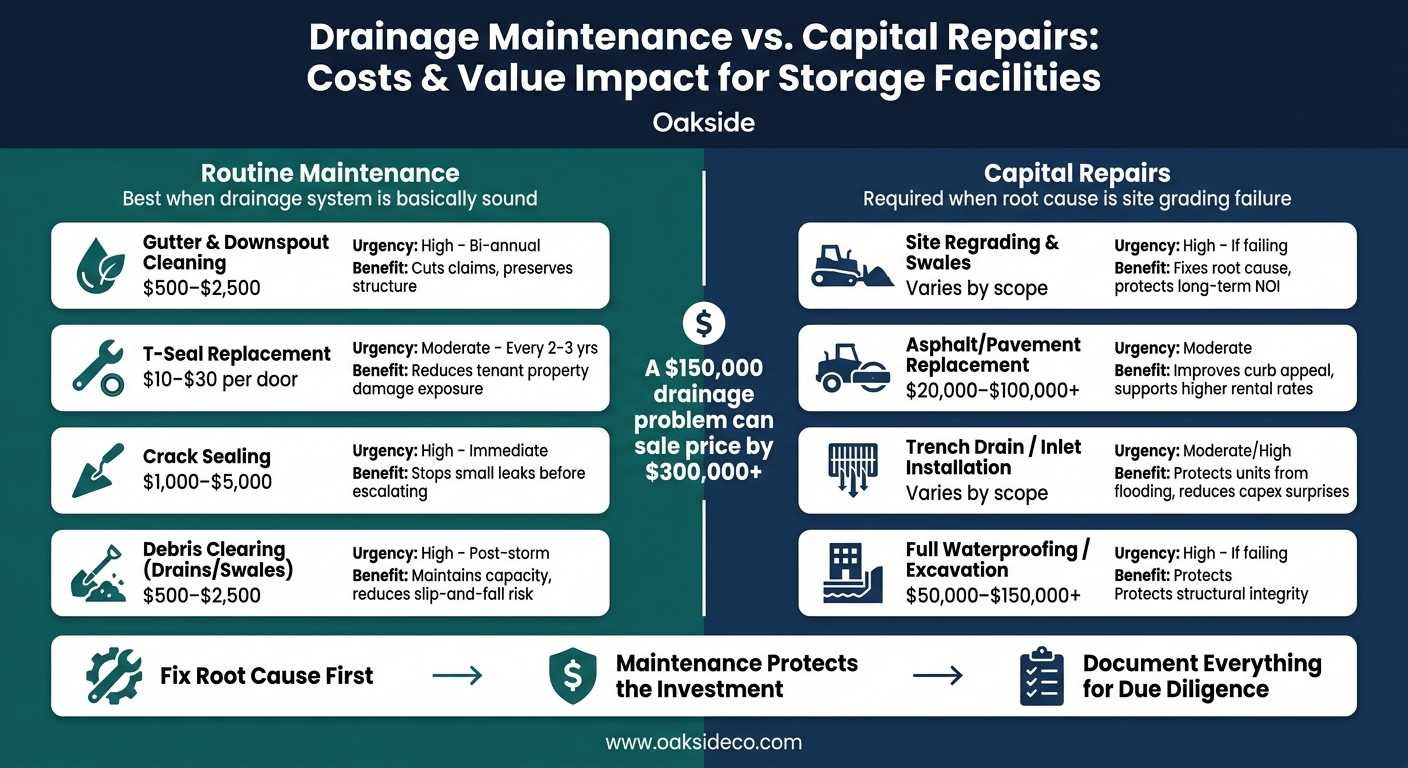
Drainage Maintenance vs. Capital Repairs: Costs & Value Impact for Storage Facilities
Once drainage risk is visible, the next move is to fix the site before buyers start baking that damage into pricing.
Capital Improvements That Fix Root Causes
Capital repairs protect NOI by stopping water where it starts. If water keeps pooling near foundations or units flood more than once, that points to a site drainage failure, not a simple cleaning issue.
The best projects deal with the cause, not just the mess left behind. Site regrading is often the first place to look. The Self-Storage Association (SSA) requires a minimum 1% positive drainage grade to move water away from unit entrances. If the property doesn’t meet that slope, routine cleaning won’t stop flooding. Swales, trench drains, and added inlets can also help by moving runoff away from low areas.
Use gravity drainage when the site allows for it. It doesn’t need power and usually takes less upkeep than pumps. If mechanical drainage can’t be avoided, test pumps every quarter and after each major storm event.
The right fix depends on slope, soil, paving, and storm volume.
Once the root cause is handled, regular upkeep keeps that repair from losing its edge.
Routine Maintenance That Stops Small Problems From Growing
Routine maintenance protects the money spent on drainage repairs.
Inspect the property within 24 hours after more than 1 inch of rain to catch pooling, slow drains, and grade shifts. Over time, those notes build a paper trail that can help during due diligence and insurance claims.
Clean gutters at least twice a year and right after major storms. Downspouts should discharge at least 4 to 6 feet away from the building foundation. Check retention ponds and swales for sediment buildup. Once it passes 6 inches, dredging is usually needed. Door bottom seals, or T-seals, wear down over time and should be replaced every 2 to 3 years to help block wind-driven rain from getting into units.
It also helps to document inspection dates, completed work, and repeat problem spots. That maintenance history can support lender confidence and buyer trust when it’s time to sell. For owners with questions about selling a self-storage facility, proving consistent upkeep is a critical step in the valuation process.
Low-Cost Maintenance Actions vs. Higher-Cost Capital Repairs
The table below shows common drainage tasks, their typical costs, and what each one helps prevent. Lower-cost actions work best when the drainage system is basically sound. If site grading is failing underneath it all, capital repairs are the only durable fix.
| Action Type | Task | Typical Cost (USD) | Problem Addressed | Urgency | Value-Preservation Benefit |
|---|---|---|---|---|---|
| Maintenance | Gutter & Downspout Cleaning | $500–$2,500 | Foundation saturation; unit leaks | High (Bi-annual) | Cuts claims and preserves structure |
| Maintenance | T-Seal Replacement | $10–$30 per door | Wind-driven rain entering units | Moderate (Every 2–3 yrs) | Reduces tenant property damage exposure |
| Maintenance | Crack Sealing | $1,000–$5,000 | Minor water infiltration; larger repairs | High (Immediate) | Stops small leaks before they escalate |
| Maintenance | Debris Clearing (Drains/Swales) | $500–$2,500 | Surface flooding; standing water | High (Post-storm) | Maintains capacity; reduces slip-and-fall risk |
| Capital | Site Regrading & Swales | Varies by scope | Poor runoff; pooling at foundations | High (If failing) | Fixes root cause; protects long-term NOI |
| Capital | Asphalt/Pavement Replacement | $20,000–$100,000+ | Trip hazards; poor surface drainage | Moderate | Improves curb appeal; supports higher rental rates |
| Capital | Trench Drain / Inlet Installation | Varies by scope | Heavy runoff near low-lying units | Moderate/High | Protects units from flooding; reduces capex surprises |
| Capital | Full Waterproofing / Excavation | $50,000–$150,000+ | Below-grade seepage; membrane failure | High (If failing) | Protects structural integrity; needs strong ROI justification |
The right mix of maintenance and capital repairs protects NOI, limits claims, and supports resale value.
Conclusion: A Drainage Risk Plan for Storage Owners
Once drainage work is under control, the focus shifts to protecting NOI and resale value. Poor drainage rarely stays a simple maintenance issue. Leave it alone long enough, and it starts to push up operating costs, increase tenant turnover, invite structural damage, and hand buyers a clear reason to lower their offers – often by more than the repair bill itself.
The gap between a well-kept asset and a neglected one shows up fast in cash flow, occupancy stability, and the level of confidence buyers and lenders put in the property.
Key Takeaways for Ownership and disposition planning
For owners getting ready to sell or refinance, the next move is documentation and capital reserve planning.
Inspect the site after heavy rain, document repeat problem areas, and fix defects before they snowball. That paper trail carries weight during due diligence. It shows buyers that the property has been managed with discipline, and it can help support lender confidence during refinancing.
Before taking an asset to market, deal with visible drainage issues like:
- Standing water near unit doors
- Rust on metal door frames
- Soft spots in asphalt
Buyers and appraisers look closely at these conditions during due diligence, so unresolved issues can weaken how the asset is viewed.
Flood-prone sites should keep 4%–5% of gross revenue in reserves, compared with about 2% for low-risk properties. That cushion helps keep drainage work from turning into reactive repairs that disrupt cash flow.
For dispositions and refinances, Oakside Co can assess drainage risk before it affects pricing.
FAQs
How does poor drainage reduce property value?
Poor drainage can drag down property value fast. It often leads to water intrusion, structural damage, and tenant claims that eat into net operating income.
Standing water and leaks can also turn into long-term liabilities. They may trigger insurance concerns and expensive repairs. To a buyer or lender, those problems can look like a sign of neglect, which can mean less favorable financing and a lower valuation.
What drainage issues do buyers notice first?
Buyers usually spot the plain signs of water trouble and structural risk first, including:
- Ponding in driveways and aisles after rain
- Standing water near foundations or doorways
- Grading that sends water toward buildings
- Downspouts that discharge too close to unit thresholds
- Uneven or poorly sealing doors, which can point to slab movement and drainage failures
As Nolen Masserman, Managing Director at Oakside, notes, spotting these signs of deferred maintenance early helps protect asset value.
Should I fix drainage before selling or refinancing?
Yes. Drainage issues are a major red flag for buyers and lenders. They can lead to lower offers or weaker financing terms that cost more than the repair itself.
Fixing them shows operational discipline and helps protect property value. As Nolen Masserman, Managing Director at Oakside, notes, clear maintenance transparency helps avoid due diligence surprises and supports a smoother transaction.